
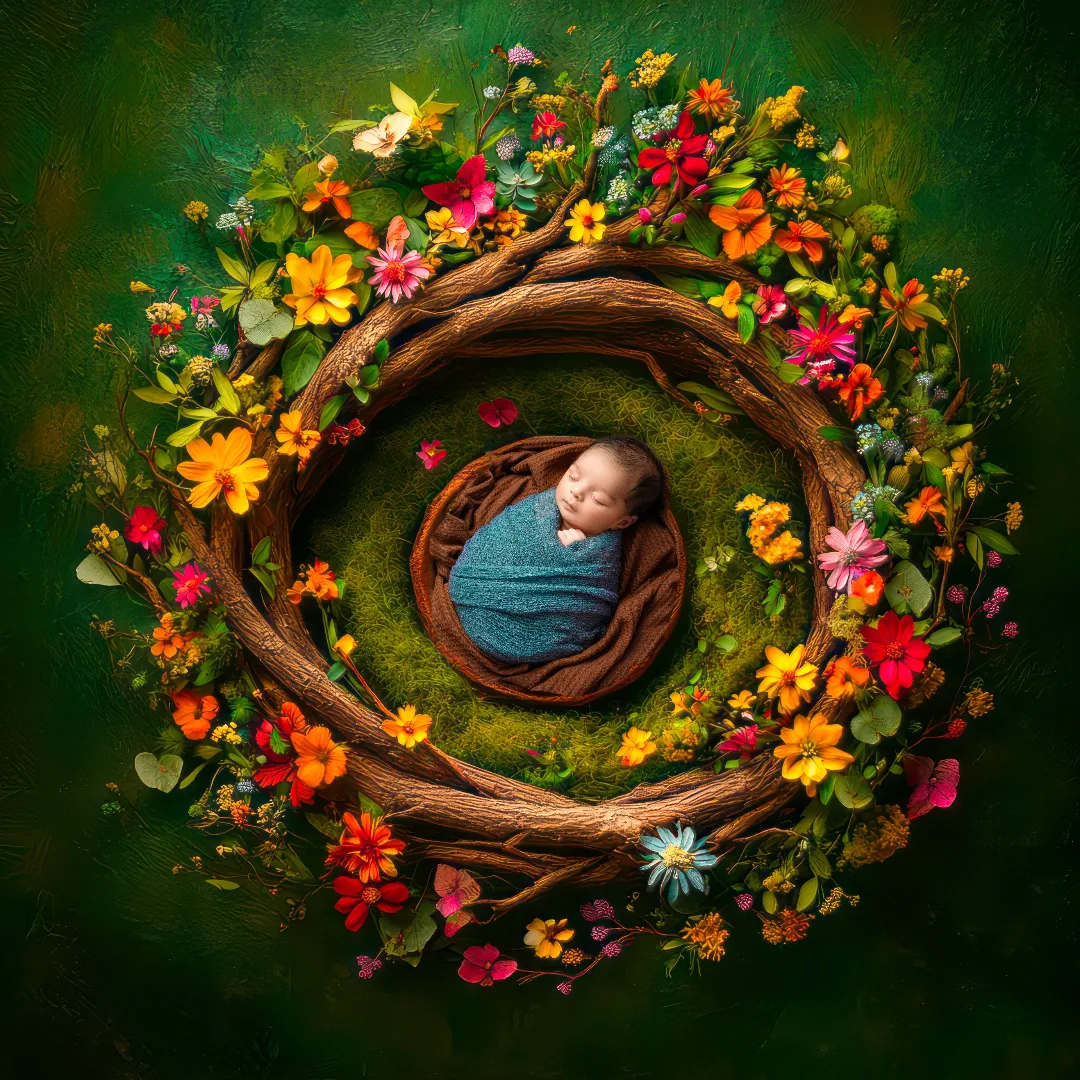
Newborn photography is a professional portrait session conducted within the first two weeks of a baby’s life to document early physical details, family connection, and developmental features that change rapidly after birth. Most sessions take place between days 5 and 14, when infants sleep deeply and can be gently posed in a safe, controlled studio environment. Parents typically book during pregnancy to secure availability. The purpose is both artistic and documentary: to preserve a brief stage of life that cannot be recreated.
Key Takeaways
- The ideal age for newborn photography is 5 to 14 days after birth
- Sessions are conducted in warm, safety-controlled studio settings
- Early booking during the second or third trimester is recommended
- Professional photographers follow strict newborn safety guidelines
- Images preserve developmental features that change within weeks
What Is Newborn Photography?
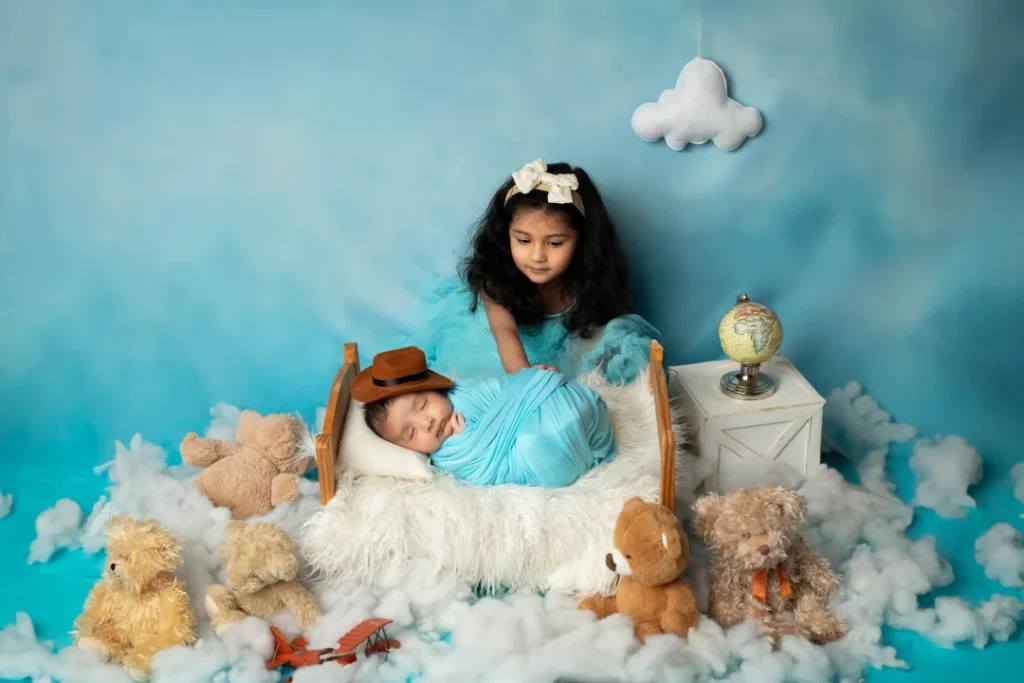
Newborn photography is a specialized branch of portrait photography focused on infants in their earliest days. Unlike general baby photography, it requires training in newborn handling, temperature control, posing safety, and feeding timing.
During the first two weeks, infants naturally curl into womb-like positions and sleep for extended periods. According to the American Academy of Pediatrics, newborns sleep between 14 and 17 hours per day in the early weeks. This natural sleep cycle allows photographers to create calm, secure poses without distress.
Sessions typically include:
- Wrapped poses
- Natural sleeping portraits
- Parent and sibling portraits
- Close-up detail shots of hands, feet, and facial features
- Themed setups using soft fabrics and neutral tones
The goal is not decoration alone. It is documentation of a fleeting developmental stage.
Why the First 14 Days Matter
Rapid Development in the Newborn Period
The newborn stage is brief. According to the World Health Organization, the neonatal period spans the first 28 days of life. During this time, physical features shift quickly. Facial swelling reduces. Skin texture changes. Muscle tone strengthens.
Within weeks, infants stretch out, become more alert, and lose the curled posture typical of the womb.
Newborn photography captures:
- Fine hair patterns
- Delicate eyelashes
- Curled fingers and toes
- Sleep expressions
- Early parent-infant bonding
These characteristics are temporary. Many parents find that by the end of the first month, their baby already looks noticeably different.
When Should You Book a Newborn Photography Session?
Best Time to Schedule
The ideal booking window is during pregnancy, typically between 20 and 32 weeks.
Professional photographers reserve tentative dates based on the expected due date. Once the baby is born, the session is confirmed within the optimal 5 to 14 day period.
Why Early Booking Is Important
Newborn photographers accept limited sessions per month to maintain safety and flexibility. Unlike event photography, newborn sessions cannot be postponed indefinitely without affecting results.
In regions with high birth rates, availability can be limited. Data from the Australian Bureau of Statistics shows over 300,000 births annually in Australia in recent reporting years. This consistent demand increases competition for experienced photographers.
What Happens During a Newborn Photography Session?
Studio Environment
A professional newborn studio is carefully prepared:
- Temperature maintained between 26 and 28°C
- Sanitized wraps and props
- Soft lighting that mimics natural daylight
- White noise for soothing
The baby’s comfort determines the session pace. Feeding breaks are expected. Sessions typically last 2 to 4 hours.
Safety Protocols
Safety is foundational.
The National Association of Professional Child Photographers emphasizes that newborn posing must never restrict breathing or circulation. Composite editing is often used for complex poses, meaning images are merged digitally to ensure no unsupported positions occur.
Professional photographers support:
- Head and neck stability
- Airway visibility
- Gentle, natural positioning
- Constant adult supervision
Parents should feel confident asking about safety training and insurance coverage.
Types of Newborn Photography Styles
| Style | Description | Best For |
| Wrapped Posing | Baby swaddled in soft fabrics | Calm, secure imagery |
| Natural Lifestyle | Minimal posing, parent interaction | Documentary feel |
| Themed Studio | Styled sets with props | Artistic portraits |
| Black and White | Focus on contrast and form | Timeless aesthetic |
| Parent-Centered | Skin-to-skin and family shots | Emotional storytelling |
Each approach reflects a different intention. Some families prefer minimal styling. Others choose curated artistic themes. The best choice depends on personal taste and home display goals.
Emotional and Psychological Value
Why Parents Choose Newborn Photography
Photographs serve as visual memory anchors. Research in developmental psychology suggests that visual records strengthen autobiographical memory formation later in life.
Professor Linda Henkel of Fairfield University has studied memory and photography. She observes that photographs can help preserve details that would otherwise fade from recollection.
For parents, newborn portraits often become heirlooms. They document:
- First family identity
- Early bonding
- Transition into parenthood
These images frequently appear in albums, framed displays, and milestone collections.
Preparing for a Newborn Session
Before the Session:
- Feed baby just before arrival
- Dress baby in loose clothing
- Bring extra nappies and milk
- Avoid tight socks or clothing that leaves marks
- Pack a pacifier if used
For Parents:
- Choose neutral clothing
- Avoid bold patterns
- Keep jewelry minimal
- Rest when possible beforehand
Clear communication with the photographer ensures smooth preparation.
Conclusion
Newborn photography is both documentation and art. Conducted within the first two weeks of life, it captures developmental details that change rapidly. Safe studio practices, professional handling knowledge, and thoughtful composition ensure that images are created without risk or stress.
Parents considering newborn photography should book during pregnancy, confirm safety protocols, and select a style aligned with personal taste. When approached carefully, a newborn session becomes a calm, meaningful experience rather than a hurried event.
For families seeking to preserve early memories with accuracy and care, the next step is simple: consult a qualified newborn photographer, review portfolio consistency, and schedule during the recommended time window. The earliest days pass quickly. Photographs provide a lasting record of their quiet beginning.
Frequently Asked Questions
Q: Is newborn photography safe?
A: Yes, when conducted by a trained professional who follows infant safety standards, maintains proper temperature control, and supports all poses securely.
Q: What if my baby is older than two weeks?
A: Lifestyle photography remains possible. While deeply curled poses may not be achievable, awake portraits can be equally meaningful.
Q: Can siblings participate?
A: Yes. Many sessions include sibling and family portraits. Preparation and timing are adjusted to keep young children comfortable.
Q: How long does editing take?
A: Turnaround typically ranges from 2 to 3 weeks depending on workload and retouching complexity.
Q: What if my baby cries?
A: Crying is normal. Sessions allow time for feeding and soothing. Patience is built into the schedule.